 Image 1 of 1
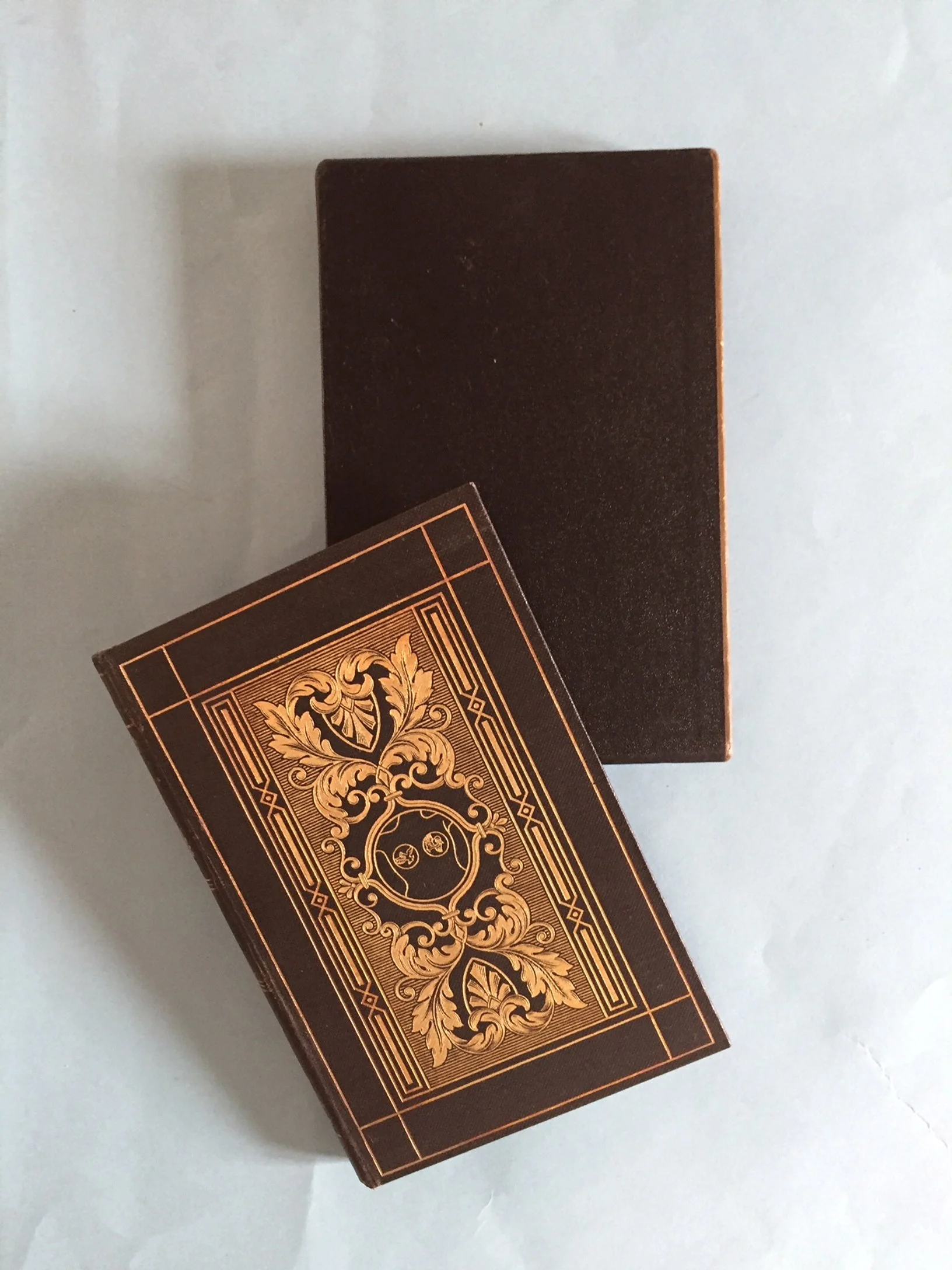
Paris: Black Sun, 1931. First edition. Hardcover. 8vo. Translated from the French by Kay Boyle. Illustrated by Max Ernst. One of 200 copies on Bristol paper, this being copy number 52. Although not called for, this copy is signed by Max Ernst on the frontispiece illustration. Furthermore, it is in the deluxe 50-copy black binding with black endpapers. Finally, the book is housed in the publisher's flimsy, somewhat used cardboard slipcase which was intended only for the deluxe edition. Such discrepancies were not uncommon for this aristocratic press, whose attention to bibliographical fidelity can better be described as casual.
The 19 photograms that illustrate the book constituted a pioneering artist's technique by Ernst, who was assisted in the endeavor by fellow Surrealist Man Ray. Carefully pencil-rubbed (what the French call "frottage") translucent papers were employed as negatives to create the photograms. In essence then, a photogram is a photograph made without the use of a camera.
The three principals of this Livre de Artiste were unlikely collaborators. Crevel, whose 1927 novel "Babylone" was the source for "Mr Knife Miss Fork," which is the novel's first chapter, committed suicide at the age of 35 after an unhappy existence as a radical political activist and closeted homosexual; Boyle, an American author at the epicenter of the expatriate colony in Paris, was gamely trying to deal with her financial short-fallings; while Ernst, an acknowledged pioneer of the burgeoning Dada and Surrealist movements in art, was likewise motivated by the opportunity to earn a few francs.
All in all, an anomalously desirable volume. Fine.
Paris: Black Sun, 1931. First edition. Hardcover. 8vo. Translated from the French by Kay Boyle. Illustrated by Max Ernst. One of 200 copies on Bristol paper, this being copy number 52. Although not called for, this copy is signed by Max Ernst on the frontispiece illustration. Furthermore, it is in the deluxe 50-copy black binding with black endpapers. Finally, the book is housed in the publisher's flimsy, somewhat used cardboard slipcase which was intended only for the deluxe edition. Such discrepancies were not uncommon for this aristocratic press, whose attention to bibliographical fidelity can better be described as casual.
The 19 photograms that illustrate the book constituted a pioneering artist's technique by Ernst, who was assisted in the endeavor by fellow Surrealist Man Ray. Carefully pencil-rubbed (what the French call "frottage") translucent papers were employed as negatives to create the photograms. In essence then, a photogram is a photograph made without the use of a camera.
The three principals of this Livre de Artiste were unlikely collaborators. Crevel, whose 1927 novel "Babylone" was the source for "Mr Knife Miss Fork," which is the novel's first chapter, committed suicide at the age of 35 after an unhappy existence as a radical political activist and closeted homosexual; Boyle, an American author at the epicenter of the expatriate colony in Paris, was gamely trying to deal with her financial short-fallings; while Ernst, an acknowledged pioneer of the burgeoning Dada and Surrealist movements in art, was likewise motivated by the opportunity to earn a few francs.
All in all, an anomalously desirable volume. Fine.